
Fall-Proofing Your Home
Fall-proofing your home can help prevent more than 75% of falls that take place inside or in close proximity to the home.
But your home doesn’t have to be an obstacle course of potential falls.
Some simple and quick changes will easily help reduce your risk of falling.
The following tips for fall-proofing your home can help you fall-proof your home today.
The front door
- Check your front steps. If you have steps at the entrance of your home, make sure they are not broken or uneven, and repair any cracks or loose steps right away.
- Check the lighting around your front door. Make sure all entryways are well lit so you can see where you are stepping. Motion sensor lights can be very helpful, so you don’t have to worry about turning lights on yourself. Motion sensor lights can also save you money on energy costs.
- Consider installing a grab bar. Installing grab bars on your door can help prevent falls as they can provide balance while entering, unlocking, or stepping in the door.
Kitchen
- Move your most commonly used items within reach. Put the kitchen items you use every day—like plates, glasses, or even seasonings—on the lowest shelves. This will help you avoid using stepstools and chairs—things you can easily lose your balance on—to reach items on higher shelves. Plan a head for special needs. Ask a loved one or visitor for help every few months or so to rotate seasonal items to within reach—for example baking dishes that are only used at holiday time.
- Replace scatter rugs with rubber backed rugs. Scatter rugs or area rugs are tripping hazards. If you prefer to have a mat on the floor near the sink or stove, make sure it is placed securely on the floor and doesn’t have turned corners or edges you could trip on. The best rugs have heavy-backed rubber bottoms so they stay in place.
- Clean up spills immediately. Kitchen floors can be slippery and very dangerous when wet! Keep a hand towel within close reach to help you clean up spills easily and quickly.
Stairs
- Keep steps clutter-free. Give yourself a clear path up and down by making sure things like shoes and books are put away and not left sitting on steps.
- Add strips of contrasting color to help visualize your stairs better. Adding colored tape to the edges of each step will help differentiate monochromatic steps. Pick a color of tape that will stand out against the color of the stairs. Make sure to put the tape on the top and over the edge of each step.
- Try to have lighting at the top and bottom of the stairs. Overhead lights at the top and bottom are ideal. A light switch at the top and bottom of the stairs keeps you prepared no matter which direction you’re going.
- Add a second handrail. Most staircases only have one rail, but handrails on both sides will help keep you balanced. It’s important to make sure they are both installed securely so they will support you.
Hallway
- Check your lighting. Good lighting is key in all areas of the home, but don’t get a chair or stepladder to change out-of-reach high bulbs. Ask your family members, friends, or neighbors when needed to replace bulbs for you, and consider LED bulbs to help reduce the number of times you have to address this issue. They last longer and can save you money in the long run.
Bedroom
- Make sure the light near the bed is easy to reach. If you have to get up in the night, you know you’re just a click away from better visibility.
- Keep the path from your bed to the bathroom clear. Make sure it is well lit and clutter free. Place nightlights along the route, so you can see where you’re walking. Some nightlights have sensors and go on by themselves after dark or in response to motion.
- Consider installing a bed rail. There are railings that fit easily between your mattress and box spring and can provide support when you are getting in and out of bed. The bed rail is also good for times when you go from lying/sitting/standing, and the change of position makes you dizzy. Having something to hold onto will keep you steady while your body adjusts.
- Move the phone within arm’s reach of your bed. You might need help in the middle of the night, so having a phone nearby is a safe option.
Bathroom
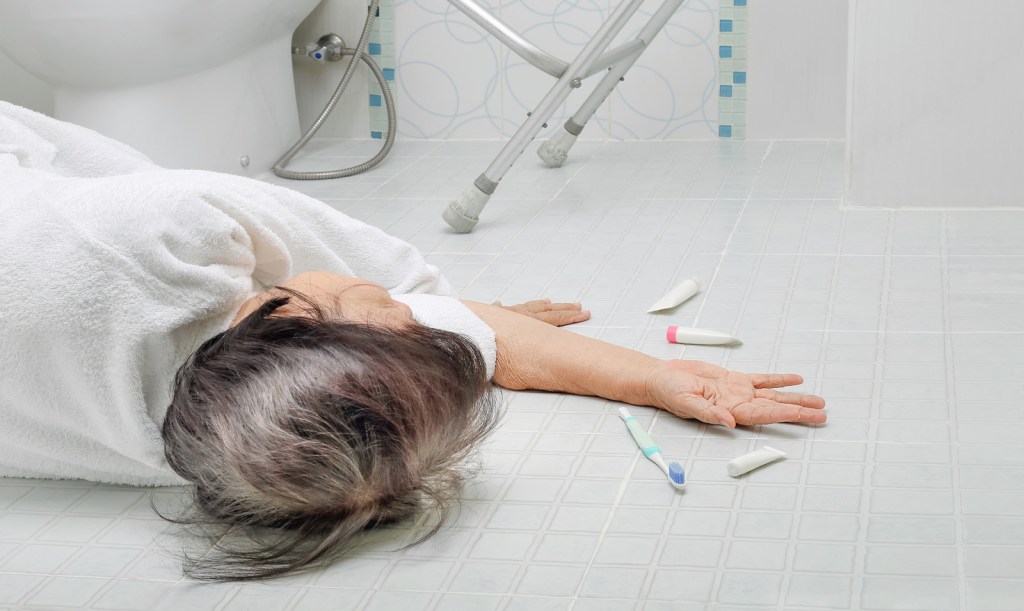
- Add a non-slip rubber mat to the shower or tub. The traction of the mat or rubber self-stick strips will help keep you from slipping when stepping on wet surfaces.
- Install grab bars by the toilet and tub. The hard surfaces of the bathroom can make falling even more dangerous. Having properly installed grab bars around the toilet and tub provide needed support and balance. Remember, towel racks aren’t grab bars, but grab bars can be towel racks. Grab bars should be installed by a professional to make sure they are at the correct levels and properly anchored to the walls. The National Association of Home Builders has Certified Aging-in-Place Specialists who work in many communities. If you cannot find a certified professional, check with your local Area Agency on Aging for a list of handymen who can help with installation.
- Consider a shower chair and a hand-held shower head. These can help you avoid reaching or straining during your shower.
- Install a walk-in bathtub. Walk-in bathtubs allow you to bathe in a seated or slightly reclined position, greatly reducing your risk of slipping.
Occupational therapist can help
Occupational therapists help you continue doing daily tasks. When it comes to falls, they can assess your home environment to identify hazards and suggest ways to improve the fit between your home and your activities to keep you safer.
When purchasing equipment for your home such as grab bars or ramps, it’s important to keep in mind that not every toilet or doorway is made equal.
It’s not always as simple as going to your local hardware store or pharmacy and asking a clerk for assistance—sometimes you need an expert when fall-proofing your home, and that’s where an occupational therapist can help.
Reminders
When assessing your home, identify the following:
- Good lighting
- Clutter
- Easy access to the things you use the most

Also, as a best practice, you should have three points of contact no matter what you are doing.
If you are walking up steps or maneuvering in and out of your shower, for instance, you want to have two hands and one foot or two feet and one hand in contact with something sturdy.
Ask your landlord about making safety accommodation changes if you’re not a homeowner.
They will often work with you to get accommodations in place. Don’t assume just because you are renting that you can’t make the necessary changes to prevent falls.
For your safety, we encourage you to make at least one fall prevention improvement in your residence today.
If a fall does occur, or if you are looking to be proactive ahead of any fall that could occur, medical alert devices can also detect a fall in your home and alert your emergency contacts.
Our caregivers can also assist you with fall-proofing your home and fall prevention tips and strategies, so you can maximize your freedom and comfort in your own home.
Call us today to arrange care – let us help you.
 CARINGWAVES
Leave a comment